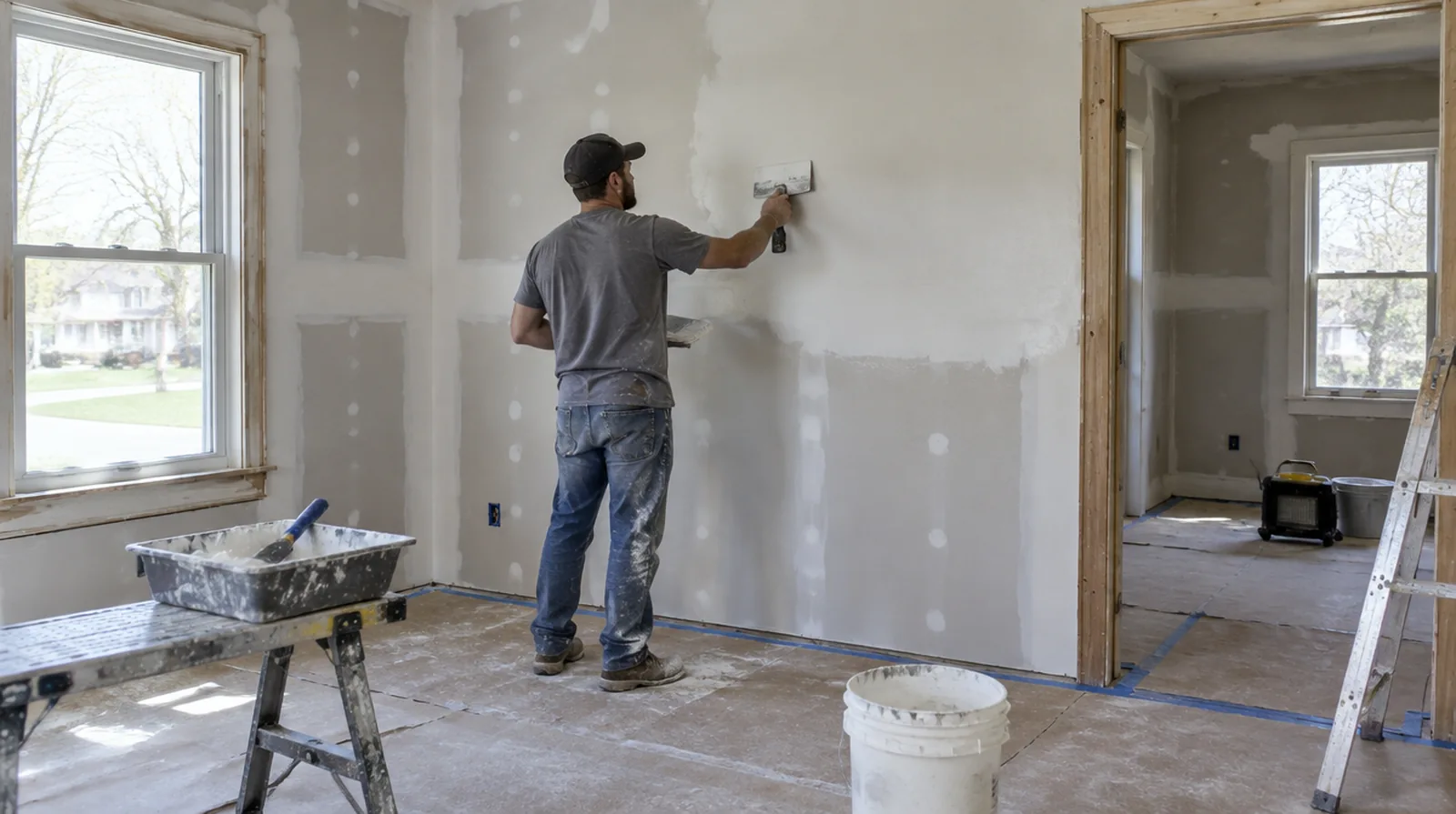
Refine with minimal sanding
Careful application limits how much abrasive refinement is needed later. Even so, plan dust protection and extraction for the fine particles produced by broad surface work. Before comparing two proposals, check that both include the same protection, finishing and cleanup boundaries rather than comparing totals alone.
Define the smoothing target
Removing the visual effect of light texture is not the same task as straightening a badly uneven plane. The scope should describe what the skim is expected to improve and what remains outside that finish treatment. At a repair beside an opening, allow clearance for moving board through the doorway and space to use the finishing tools effectively.
Let each coat dry
Room temperature, humidity and airflow influence time needed for drying across a broad coated surface. A rushed next coat can drag or disturb material that has not set up sufficiently. Where the quoted work stops before painting, request an explicit description of what remains so the next decorating stage can be priced realistically.
Apply controlled thin layers
Build a refined surface with controlled applications rather than a heavy unsupported deposit. More than one pass may be necessary where the existing texture creates deeper low points. If the problem developed after another renovation, explain which nearby materials or building systems changed before the damage became noticeable.
Check underlying movement
A skim coat improves the surface profile but does not repair structural movement or unstable board. Assess recurring cracks and complete necessary reinforcement before covering the area with a skim. For a wall receiving a decorative covering, provide its preparation requirements early enough for the drywall finish to support that product.
Work around trim carefully
Baseboards, frames and fixed fittings create edges that need neat transitions and protection. Decide whether trim removal is needed or whether a neat stop against it is acceptable. For a limited patch requiring substantial setup, assess the complete package of access and protection instead of relating cost only to the opening size.
Prime before decoration
The new skim needs compatible priming before its final decorative coatings. Primer helps equalize absorption and may reveal small touch ups that ought to be resolved before the final coat. For a distinctive existing pattern, retain a reference sample or detailed picture to make the matching discussion more specific.
Inspect using side light
A surface can appear even under direct lighting while revealing shallow tool lines from the side. Review the dry wall under the conditions that will matter after the interior is decorated. At a repair beside an opening, allow clearance for moving board through the doorway and space to use the finishing tools effectively.
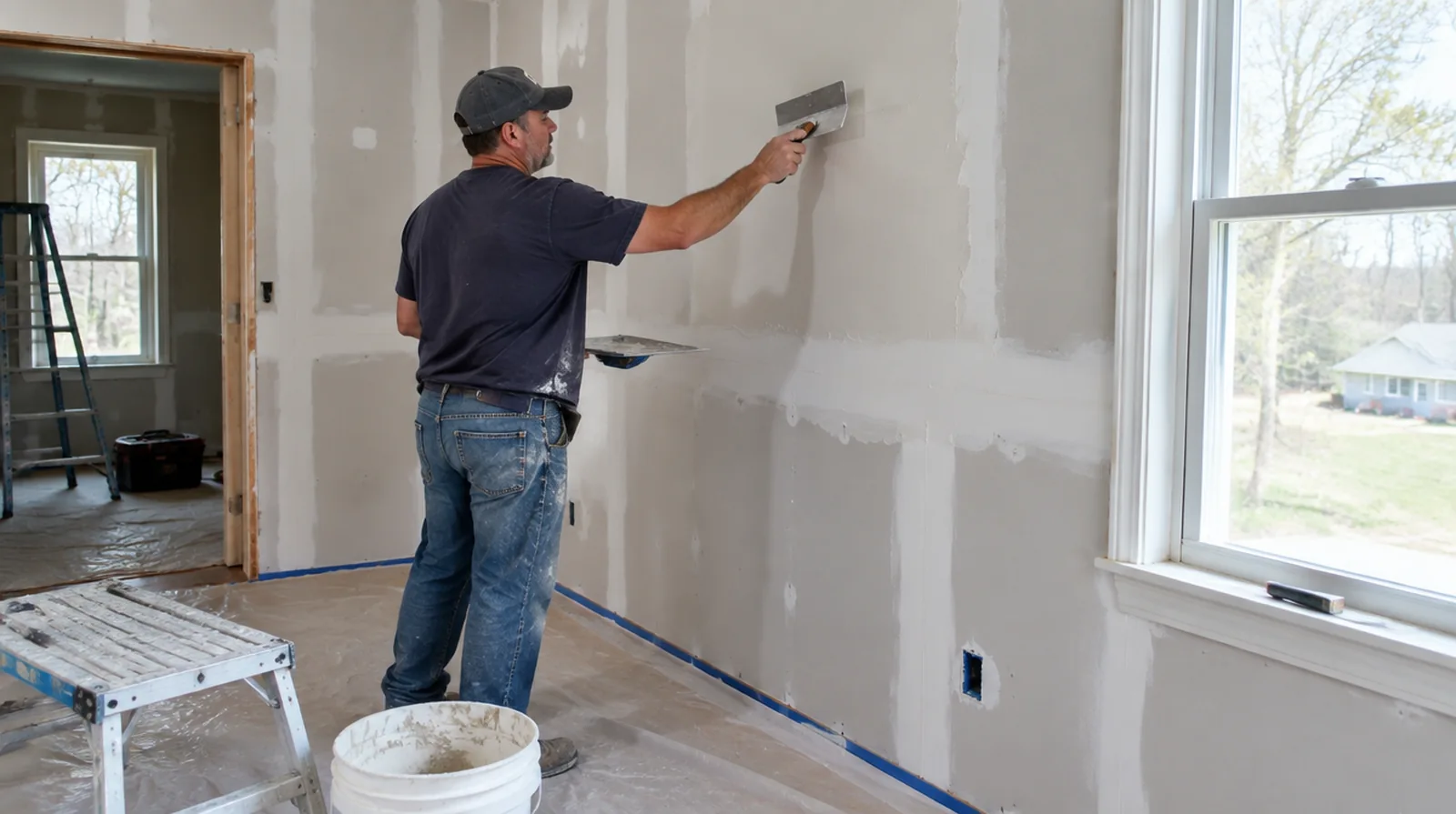
Stabilize torn paper
Exposed drywall paper can bubble when it receives wet compound without suitable preparation. Damaged spots need an suitable sealing approach before the broad finishing coats are applied. At a ceiling or wall containing fittings, assign removal and reinstatement duties for the affected devices before repair access is needed.
Choose paint with the finish
Higher sheen coatings can emphasize small variations that a matte finish makes less obvious. Connect the paint selection to the agreed preparation standard before deciding how extensive the skim work should be. At a repair beside an opening, allow clearance for moving board through the doorway and space to use the finishing tools effectively.
Project context in Independence
Agree whether the repair covers the full stair wall or only the cracked area. Tell the assessor when the crack appears and whether it closes in summer.
Scope questions before finishing
When the decorative coating has been selected, tell the finisher its intended sheen and color while the substrate preparation standard is still being agreed.
For a wall receiving a decorative covering, provide its preparation requirements early sufficient for the drywall finish to support that product.
Where flooring is staying in place, agree on protective coverings and check that tools and material handling will not damage the visible finish.
If the surface condition is uncertain, allow for an assessment that can distinguish stable material from layers that should never be covered.
For a planned new wall mounted fixture, resolve its backing requirements while the cavity remains open instead of cutting into completed drywall later.
If a room has only limited ventilation, discuss how the finishing materials can dry without disrupting comfort or spreading dust elsewhere.
When the history of a repair is uncertain, note when it became noticeable and whether its appearance has altered across different seasons.
If a distinct painter completes decoration, agree the condition of the handed over surface and assign responsibility for small final corrections.
When the same defect has returned, share information about previous repair methods so the next assessment can consider why they did not last.
For work spread across differing planes, record their dimensions separately and describe the boundary of the treatment on each surface.
For a distinctive existing pattern, retain a reference sample or detailed picture to make the matching discussion more specific.
If the wall surface work belongs to a broader renovation, coordinate its order with flooring, cabinetry and trim rather than scheduling finishing in isolation.
Explore the Independence drywall overview for related options, or read the project planning information before arranging the next stage.
More planning details for Independence
Independence has many older frame houses where stairwell walls move a little between humid summer and dry winter heating. Seams that crack every winter usually need better reinforcement, not just more compound. Front porches and stair landings are often tight, so ask how long boards will be brought in and whether some pieces should be cut outside.